Access Rider
Access Rider
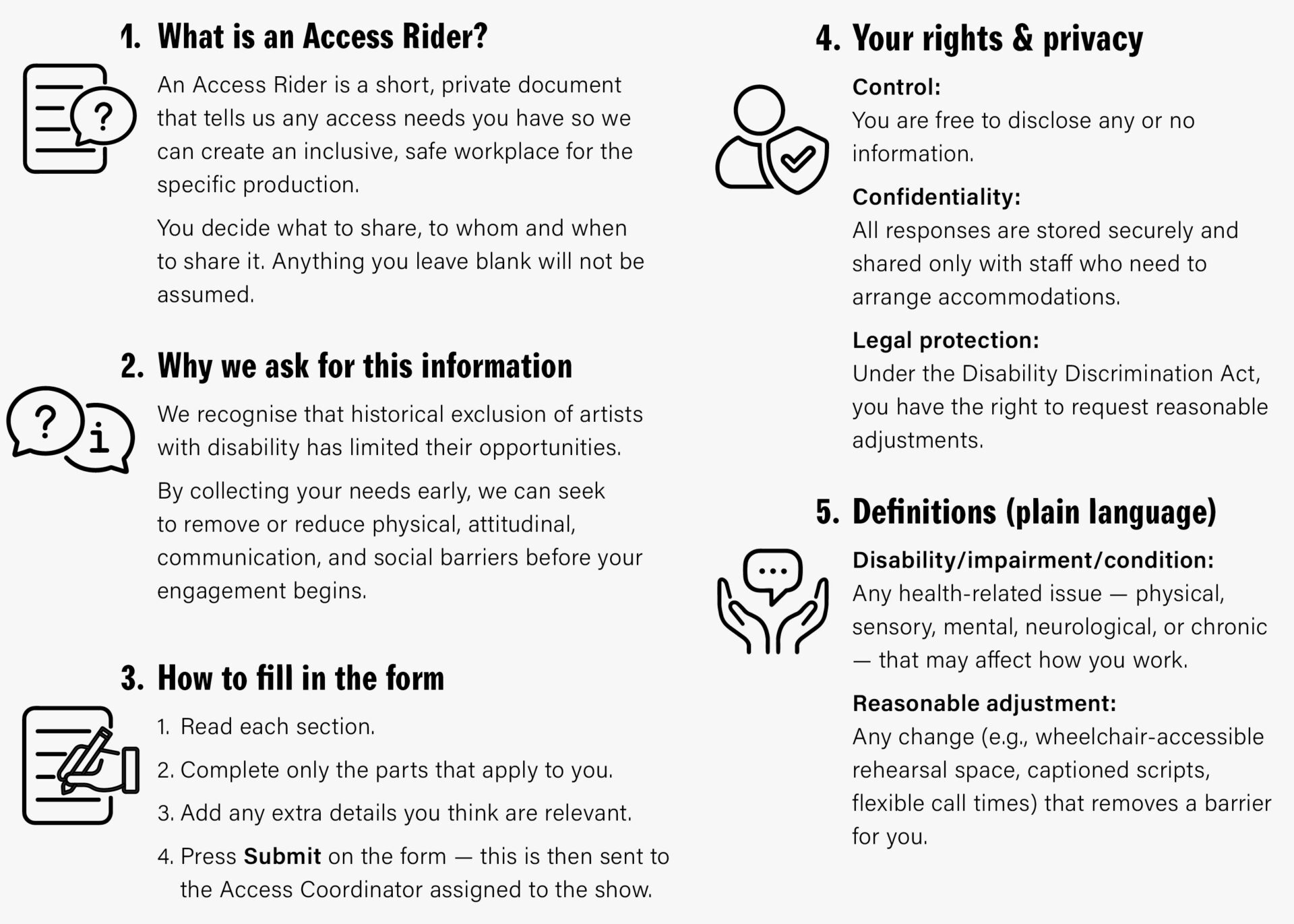
State Theatre Company is dedicated to delivering phenomenal, transformative, and inclusive theatre. We believe theatre is for everybody, and alongside our commitment to giving all South Australians the opportunity to experience theatre through our access program, we are committed to providing an accessible environment for our artists and teams. We recognise that, historically, artists with disability* have been systematically excluded—so much so that many actors and creators hesitate to disclose their needs for fear it could jeopardise their employment.
Guided by the social model of disability, we recognise that people are disabled by social and environmental factors. Under the social model of disability, it is the societal barriers that are considered to be the obstacles to a person’s equal participation.
This form marks the start of a collaborative conversation aimed at removing those systemic obstacles, and improving access for artists engaging with the Company.
If you would like this form in another format to make it easier for you to fill out (such as a Word Document), please contact info@statetheatrecompany.com.au
*Person-first language is used in this form in alignment with Government protocol, in full acknowledgment that identity-first language is many people’s preference. Feel free to include your language preference in the survey.
(This template was created in consultation with Access Coordiantor Michèle Saint-Yves)
-
For further information or examples of what a disability access document looks like please click on this link https://www.accessdocsforartists.com.